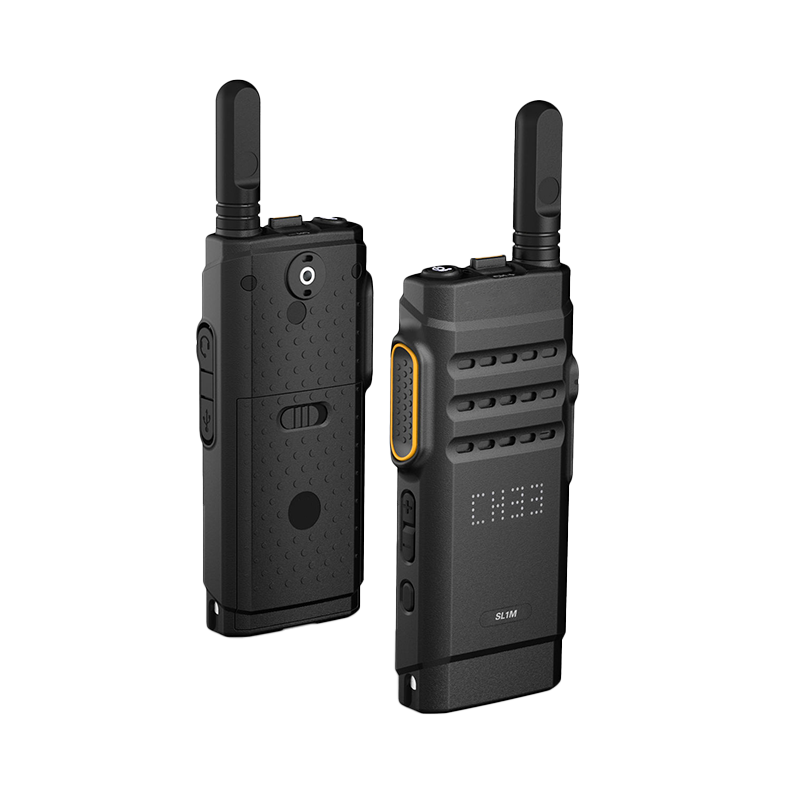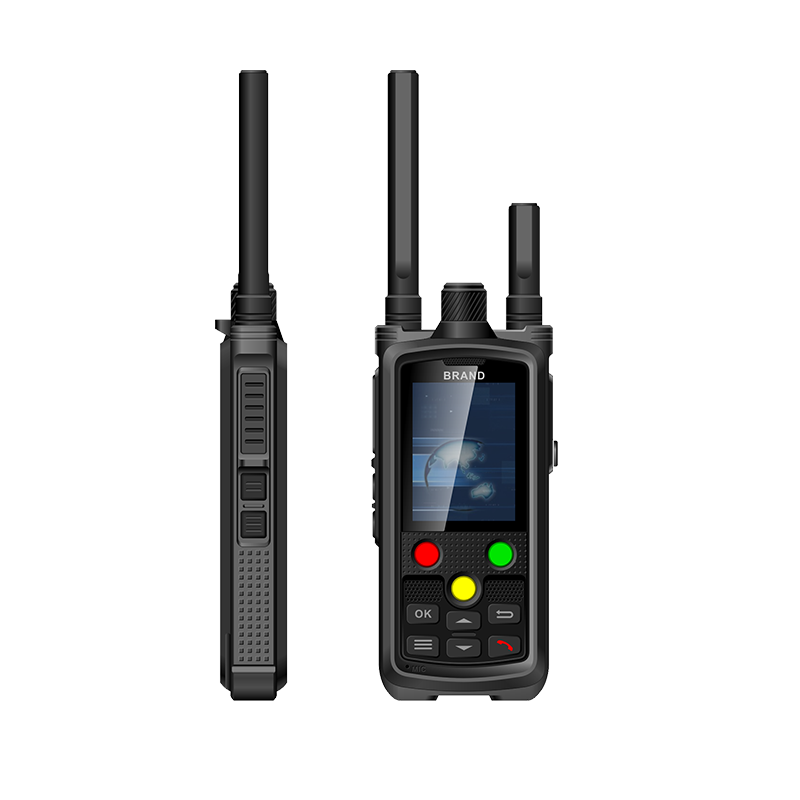



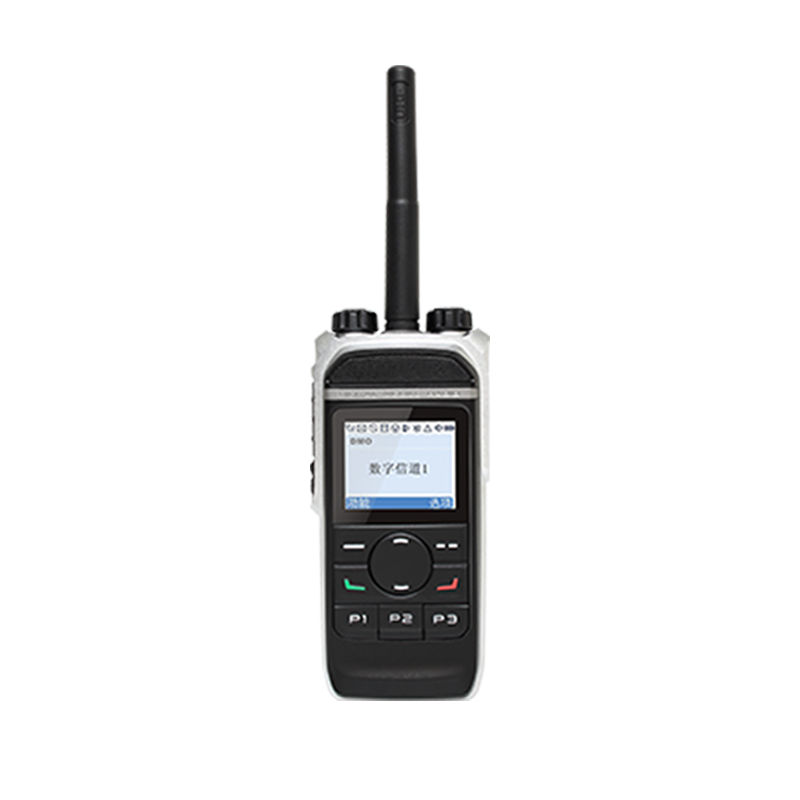
LY-DR6755X walkie-talkie
The walkie talkie covers a wide range. Here, we collectively refer to radio communication equipment operating in the ultra short wave frequency band (VHF 30-300 MHz, UHF 300-3000 MHz) as walkie talkie
The walkie talkie can make calls without any network support, without incurring any phone bills. It is suitable for relatively fixed and frequent calls, consisting of a shell, host, battery, belt clamp, seat charger, and antenna. There are three main types of walkie talkies: analog walkie talkies, digital walkie talkies, and IP walkie talkies.
Interphone is a terminal device for cluster communication, which can not only serve as a terminal device for cluster communication, but also as a professional wireless communication tool in mobile communication.
The walkie talkie covers a wide range. Here, we will collectively refer to radio communication equipment operating in the ultra short wave frequency band (VHF 30-300 MHz, UHF 300-3000 MHz) as radio walkie talkies. In fact, according to relevant national standards, they should be referred to as ultra short wave FM radio telephones. People usually refer to handheld wireless telephones with small power and size as "walkie talkies", which were previously referred to as "walkie talkies" or "walkie talkies"; A wireless telephone with high power and large volume that can be installed in vehicles (ships) or fixed for use is called a "radio", such as a car mounted station (car mounted machine), a ship mounted station, a fixed station, a base station, a transfer station, etc.
Radio walkie talkies were the earliest wireless mobile communication devices used by humans and began to be applied as early as the 1930s. In 1936, Motorola Corporation of the United States developed the first mobile radio communication product - "Patrol" Radio receiver for AM vehicles. Then, in 1940, it developed the first handheld two-way radio AM walkie talkie with a weight of 2.2 kg for the US Army Signaller, and the communication distance was 1.6 km. In 1962, Motorola launched the first handheld Walkie-talkie HT200 weighing only 935g. Its shape was called "brick" and its size was similar to that of the early cell phones.
After nearly a century of development, the application of walkie talkies has become very common, moving from specialized fields to ordinary consumption, and expanding from military to civilian use. It is not only a professional wireless communication tool in mobile communication, but also a consumer tool with consumer product characteristics that can meet people's daily needs. A walkie talkie is a terminal device that communicates from one point to multiple points, allowing many people to communicate with each other at the same time, but only one person can speak at the same time. Compared with other communication methods, this communication method has the characteristics of instant communication, instant response, economy and practicality, low operating costs, no cost of calls, convenient use, and also has functions such as group call, system call, and confidential call. In handling emergency events or conducting dispatch and command, its role cannot be replaced by other communication tools. Most traditional walkie talkies use simplex analog communication, while some walkie talkies use frequency division duplex analog communication. Digital walkie talkies are commonly used in cluster communication, but most of them use frequency division duplex
communication. The market positioning of wireless walkie talkies and other wireless communication tools (such as mobile phones) is different and difficult to replace each other. Radio walkie talkies are by no means outdated products, they will be used for a long time. With the development of the economy and social progress, people are more concerned about their own safety, work efficiency, and quality of life, and the demand for wireless walkie talkies will also grow day by day. The widespread use of walkie talkies by the public has further promoted their popularity and reliance as a means of communication.